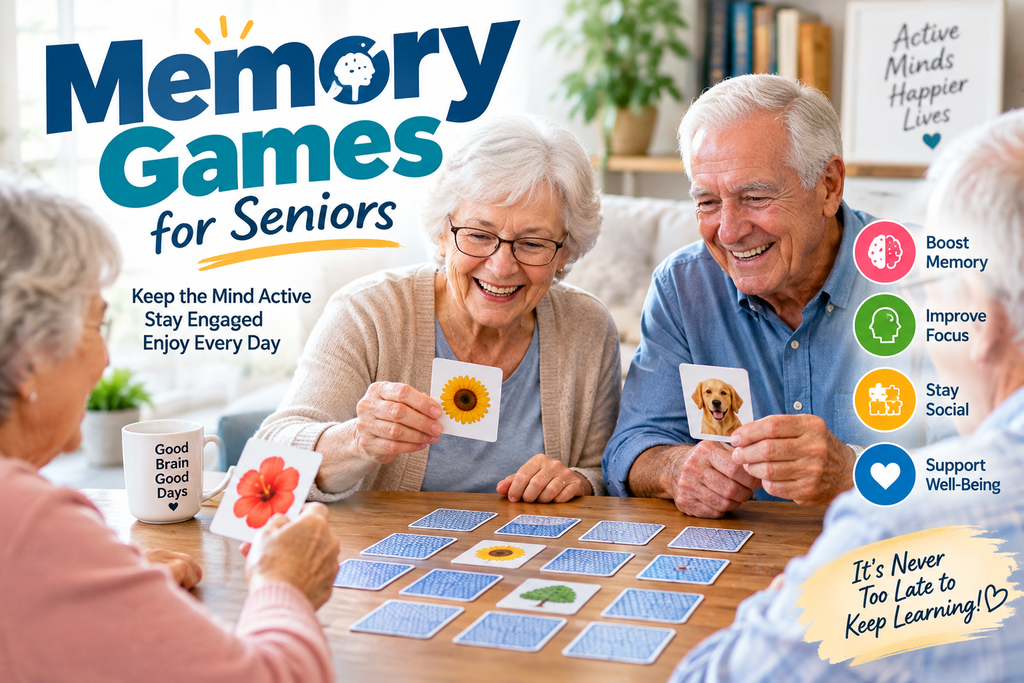
Memory Games for Seniors: Fun Ways to Keep the Mind Active
Keeping the mind active is important at every age. For seniors, simple memory games and mentally stimulating activities can provide an enjoyable way to stay engaged, practice concentration, and maintain important thinking skills.
Activities such as puzzles, card games, music, reading, and meaningful conversations can all become part of a senior’s regular routine. The goal is not to make activities difficult or stressful. They should be enjoyable, appropriately challenging, and suited to the person’s interests and abilities.
Why Are Memory Games Helpful for Seniors?
The brain has an ability known as neuroplasticity, which means it can continue forming and strengthening connections in response to learning and stimulation.
Regular mental activity can challenge memory, attention, problem-solving, language, and reasoning skills. Staying mentally and socially engaged may also contribute to what researchers call cognitive reserve, or the brain’s ability to remain resilient as we age.
The important thing is consistency. A simple activity that a senior enjoys regularly can be more useful than a complicated game they do not want to play.
1. Card Games
Card games are an easy way to combine entertainment with mental stimulation. Games such as Bridge, Rummy, Gin Rummy, Solitaire, Go Fish, and other familiar favorites can encourage memory, attention, pattern recognition, and planning.
Playing cards with another person also adds conversation and companionship, making the activity both mentally and socially engaging.
2. Jigsaw Puzzles
Jigsaw puzzles can be relaxing while still giving the brain something meaningful to work on. They involve visual processing, spatial reasoning, short-term memory, and problem-solving.
For seniors who are new to puzzles, starting with larger pieces or a lower piece count can make the activity more comfortable. Choosing a picture they genuinely enjoy can also make them more interested in completing it.
3. Crossword Puzzles
Crosswords encourage seniors to recall words, facts, and general knowledge. They can be a convenient activity to include in a morning or afternoon routine.
Large-print crossword books can be especially helpful for seniors who have difficulty reading smaller print. It is also important to choose a difficulty level that provides a challenge without becoming frustrating.
4. Word Games
Word games provide many different ways to exercise language and memory skills. Seniors can try:
- Wordle
- Word searches
- Scrabble
- Words With Friends
Changing between different types of word games can keep activities interesting and introduce new mental challenges. Digital games can also help seniors stay connected with family members who live farther away.
5. Sudoku and Number Puzzles
Sudoku is based more on logic and pattern recognition than traditional mathematics. Players must concentrate, recognize patterns, and determine where each number belongs.
Starting with easy puzzles and gradually increasing the difficulty can help seniors build confidence while continuing to challenge themselves.
6. Chess and Checkers
Chess and checkers encourage players to think ahead, recognize patterns, remember previous moves, and adjust their strategy.
Checkers can be particularly useful for someone who wants a simpler introduction to strategy games. Playing with a family member, friend, or caregiver also creates an opportunity for regular social interaction.
7. Memory Matching Games
Traditional matching games are simple and easy to adapt for different abilities. Place cards face down and have the senior turn over two cards at a time, trying to remember where matching pictures are located.
Photos of animals, flowers, foods, places, or familiar objects can make the activity more interesting and personal.
8. Music and Singing
Memory activities do not always have to look like games. Music can engage memory, language, emotion, movement, and auditory processing.
Create a playlist featuring songs the senior enjoyed when they were younger. Encourage them to sing along, remember lyrics, or talk about memories associated with particular songs.
9. Looking Through Old Photos
Family photographs can become a wonderful memory activity.
Ask simple questions such as:
“Who is in this picture?”
“Where was this taken?”
“What do you remember about that day?”
Seniors can also tell stories about childhood, work, family traditions, vacations, or important moments in their lives. These conversations engage autobiographical memory while giving families an opportunity to preserve meaningful stories.
10. Social Activities
Sometimes the best brain activity is simply spending meaningful time with another person.
Conversation requires listening, remembering, speaking, understanding emotions, and responding. Game nights, book clubs, community activities, family visits, and video calls can all combine mental stimulation with valuable social interaction.
Healthy Habits Matter Too
Memory games are only one part of supporting brain health. Everyday habits are important as well.
Seniors can benefit from getting adequate sleep, staying physically active, drinking enough water, eating nutritious foods, maintaining social connections, and continuing to learn new things. Trying a new hobby, craft, language, instrument, or game can introduce the brain to new challenges.
A Simple Daily Brain-Healthy Routine
A senior’s routine does not need to be complicated. A typical day might include a crossword or Sudoku puzzle in the morning, a short walk, reading for 20 minutes, talking with a friend or caregiver, playing a card game, listening to favorite music, and staying properly hydrated.
The original care guide recommends combining brain games with social, creative, and healthy lifestyle activities rather than relying on one activity alone.
Making Memory Games Enjoyable
Choose activities based on the senior’s interests and abilities. Someone who loves words may prefer crosswords, while another person might enjoy cards, music, puzzles, or storytelling.
Avoid turning the activity into a test. The purpose is to encourage engagement and enjoyment, not to create pressure when someone cannot remember an answer.
Playing together can make the experience more enjoyable and provide companionship at the same time.
Supporting Seniors at Home
At Elite Care At Home of Northern Virginia, caregivers can bring meaningful engagement into everyday care through conversation, games, music, creative activities, and companionship. The organization serves families in Fairfax County and Falls Church City and describes cognitive engagement as part of supporting seniors’ overall quality of life. Contact Us
Final Thoughts
Memory games for seniors do not have to be complicated. A deck of cards, a favorite song, a crossword puzzle, an old photo album, or a meaningful conversation can create an opportunity to keep the mind active and the day more engaging.
The best activities are the ones seniors enjoy enough to keep doing. A little mental stimulation, movement, creativity, and human connection each day can make a meaningful addition to a healthy aging routine.